
Trust in public health is at historic lows. Here’s how we earn it back.
If you work in public health, you already know. The last six years have been an uphill battle against misinformation, as we face some hard truths about the public’s eroding confidence in institutions’ ability—even willingness—to keep communities safe and healthy.
We have our work cut out for us, and Edelman’s recent “Trust and Health” special report makes that clear. In its survey of 16,006 respondents in 16 countries, it found:
- 70% of respondents believe at least one of six divisive health claims, including fluoride in water is harmful/unhelpful (32%) and vaccines are a tool of population control (25%).
- 64% believe fluent AI users can perform at least one task as well as—or better than—a doctor.
- Trust in media to accurately cover health information is down 11 points since January 2019, now at 46% globally.
- A partial silver lining: When it comes to diagnosis and treatment, doctors are still more influential (by 25 points) than uncredentialed sources like AI or family. But that advantage shrinks to just 6 points when it comes to prevention.
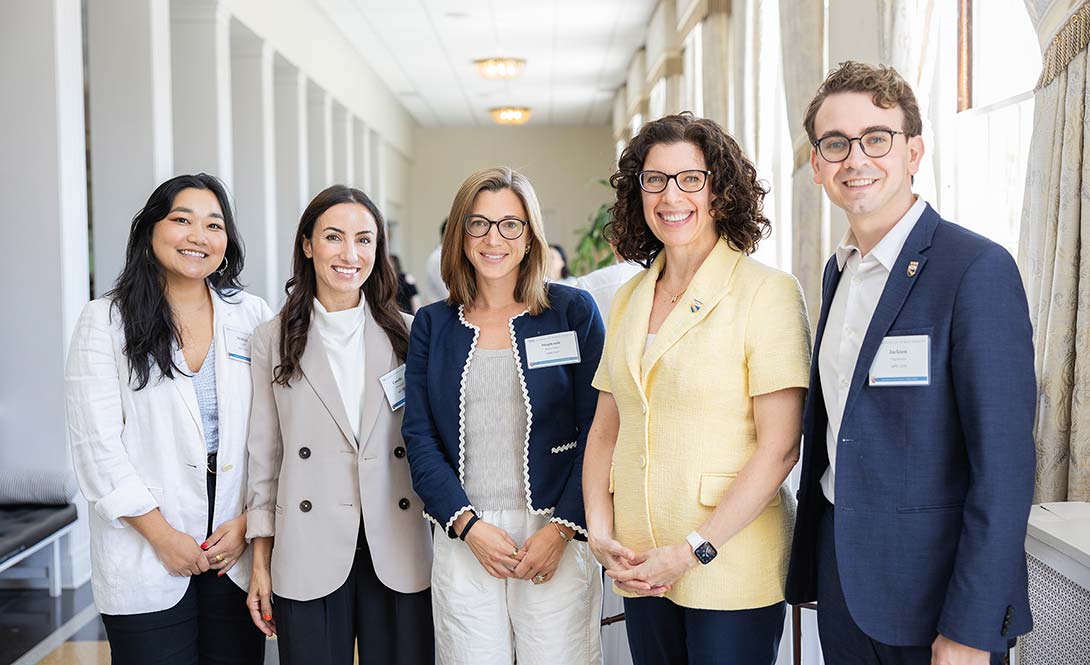
Civilian’s own Director of Strategy Camellia Mortezazadeh got an early look at this report when she joined a panel on “Trust, Communication, & Public Confidence” at Yale School of Public Health Alumni Day in June.
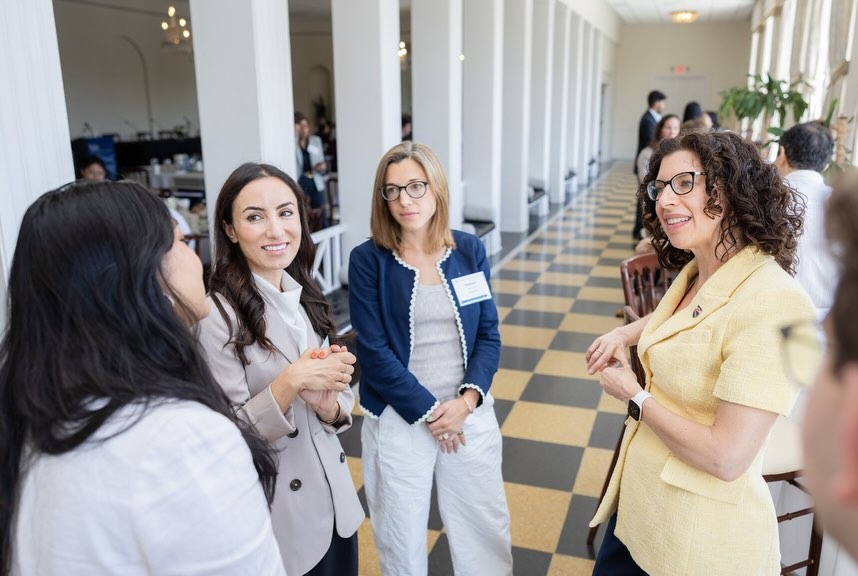
One of Camellia’s co-panelists was Stephanie Bittner Walker, a senior VP at Edelman, which created the report. She pointed to one finding in particular: More than a third of people globally are turning to AI tools for health management, in part because they find them easy to understand, nonjudgmental, and sensitive to personal limitations.
“People don’t necessarily trust AI more than health experts, but this does underscore how much the communication matters—even more so in an increasingly complex and contested information environment,” Stephanie said. “Building trust requires listening, humility, and humanity. AI tools shouldn’t out-human us.”
We couldn’t agree more.
In fact, Camellia was on the panel to talk about exactly that: why listening to communities has to come before asking them to listen to us.
It’s something Civilian knows well from our co-creation work on award-winning campaigns like Black Legacy Now, Take Action for Mental Health, Never a Bother, and Live Beyond. Again and again, we’ve seen that trust isn’t built by simply delivering the right information. It starts with understanding the people you’re trying to reach—their experiences, their barriers, the people they trust, and the places where they already feel comfortable showing up.
Here are a few of the guiding principles that shape how we do that work.
Curiosity about your audience = respect for your audience
It’s no secret we like to talk about co-creation. That’s because co-creation works. Before any single social ad, billboard, or message is created, we listen to the audience the campaign is meant to serve. For Never a Bother and Live Beyond, our paid youth advisors helped us craft the campaigns’ look and feel, language, even the campaign names.
These advisors, in their teens and twenties, gave honest feedback about creative options. They guided our strategy. They also pointed us in the direction of trusted messengers who served as campaign partners, including Megan Thee Stallion and Valkyrae.
When the campaigns went live, audiences saw their lived experiences—and even their aesthetics—reflected back to them.
Every time we work this way, we’re acknowledging that the people closest to an issue know things we don’t. That respect helps build the credibility we need when it’s time to offer guidance on what to do next.
Public health figures, get out of your ivory tower—and onto Twitch
Remember what Stephanie said above, about being human? Public health authorities need to show up as humans—and meet people where they are. This might mean hopping onto a livestream.
For example, former US Surgeon General Dr. Vivek Murthy joined Dr. Alok Kanojia (a.k.a. Dr. K) on the latter’s HealthyGamer Twitch channel, where they talked about youth mental health and loneliness.
On behalf of our Live Beyond campaign, California’s first-ever Surgeon General Dr. Nadine Burke Harris joined Melissah Yang of Refinery29 for her first conversation on Twitch about Adverse Childhood Experiences and toxic stress.
“Authority figures” and “experts” thereby become real people with their own relatable experiences. These appearances also help viewers find community and resources in the anonymous chat and rich conversations that occur throughout the stream. Live, honest public dialogues help show a campaign’s intentions and the humans behind them.
Be humble and be honest
Use plain language. Be transparent about what you know, what you don’t know, and what you’re still learning. If a recommendation might evolve in the near future, don’t be shy—say it.
Institutions learned this lesson the hard way during Covid-19. For example, a lack of clarity around changes in masking policy severely undermined public trust.
When institutions seem opaque or inconsistent, you lose credibility. That creates a vacuum, because people start to wonder what they can trust to be consistent. It’s the kind of vacuum that conspiracy theories—along with snake oil and AI hallucinations—can quickly fill.
Recognize systemic barriers
Sometimes the barrier isn’t information. It’s access.
Why won’t people just get the help they need from their doctors? Because many don’t have access to them, can’t afford to, or may not have doctors who speak their language.
Many people may see healthcare professionals, especially mental health providers, as “not for them”: unaffordable, inaccessible, biased, judgmental, or simply too difficult to navigate. If their concerns haven’t been taken seriously in the past, people won’t be inclined to trust providers. And the reality is our healthcare system is complicated and difficult to navigate, even among those of us with the access, time, language, and means.
Across our campaigns, we prioritize resources and help-seeking options that are no-cost and low-cost, and that meet the needs of diverse cultures and languages. For example, our messaging has specified that counselors at 988 “will listen without judgment,” in response to hearing from many young people who feared their challenges were too small to deserve support.
Our campaigns have also helped audiences find therapists who are experienced with and/or share identities with Black, Brown, and/or LGBTQIA+ patients, such as the Trevor Project, Therapy for Black Girls, Asian Mental Health Collective, and Latinx Therapists Action Network.
An effective campaign recognizes the obstacles folks are facing, and positions itself as a partner in tackling them.
Help people navigate the information ecosystem
At the end of the day, the public needs to be able to differentiate between reliable sources and unreliable sources. Fact versus fiction. That’s foundational to everything we just talked about. It’s also the hardest to control.
Public health communicators can’t control everything people encounter. But we can help people become better equipped to evaluate it—not just by telling people what’s true, but also by helping them understand how to identify what’s true. For example, pointing to credible sources, explaining where information comes from, encouraging people to compare claims against evidence, and giving them tools to recognize when something deserves more scrutiny.
No one likes getting duped, even if it’s something as simple as falling for AI videos about houseplants that don’t exist. When people, particularly young people, have the critical thinking skills to verify that something is rooted in reality and supported by evidence, they’re better able to resist misinformation.
How can we put these tools in front of them? Schools across the country are adding media literacy and AI literacy to their curricula. If you feel like having a better day, read about these Philly teens who are battling online slop and calling it Project FACTS.
We should be supporting this kind of literacy in our communities and among our loved ones—and building these same habits into the way we communicate, too.
It’s not just about being right
Of course, creating significant shifts in perception will take a while.
As we work toward greater transparency, curiosity, and compassion, we need to remember that public health communication isn’t just about delivering the right information. It’s about listening, building relationships, and creating the conditions for information to actually be heard—and acted on. Which, hopefully, influences someone’s life for the better.
That’s how trust is earned.