
Why we use behavior change strategies in our recycling, sustainability, and environmental campaigns
Most of us want to live in a highly sustainable, less wasteful world. But we don’t always know what actions will make a real difference. When we do know some of the actions, the barriers to completing them can seem too daunting. Or maybe it’s just not the right time.
Closing that intention-behavior gap is what we do in all of our campaigns. When we’re building initiatives around sustainability, the environment, and recycling, we apply the same behavior change expertise we use in campaigns about mental health and substance use.
Because the goal of sustainability communications isn’t just to raise awareness. It’s to inspire people to do something differently.
People generally don’t need a lecture about why the environment matters. They need communications designed around the realities of human nature and behavior—habit, convenience, trust, social norms, timing, and motivation.
We’ve put those principles to work for clients like PaintCare, County of San Diego Department of Public Works, City of San Diego Transportation and Storm Water Department, San Diego Community Power, Pacific Marine Mammal Center, and more. Results have included hundreds of millions of unique website visitors, a 20% increase in oil filter recycling rates in the areas we targeted, clean energy opt-out rates of less than 2%, and contributing to the collection of more than 92 million gallons of leftover paint, stain, and varnish.
Here are some of the behavior change principles we’ve relied on.
Start with the behavior, not the message.
When we start working on a sustainability campaign, we don’t start with “What do we need people to know?”
Instead, we ask, “What do we need people to do?” then we work backward: Who needs to take that action? What gets in the way? What might motivate them? How can we make the desired behavior easier, more normal, more relevant, and more rewarding? And how do we know whether communications are actually moving people toward that behavior?
Understand what is actually getting in the way.
When we worked with San Diego Community Power (SDCP)—a non-profit Community Choice Aggregation through which member cities use their collective buying power to gain access to cleaner energy at competitive rates—we faced a significant challenge in establishing its reputation. We needed to build trust and educate customers, all while facing strong opposition from the incumbent utility.
At the same time, the desired behaviors were exceptionally clear: don’t opt out, consider upgrading to 100% renewable power, and feel invested in the new organization.
But before we could ask people to do any of those things, we needed to understand what might keep them from doing them.
We began by conducting audience research to determine which messages would resonate most in the local community, and what misunderstandings or hesitations might get in the way.
One interesting finding was a gap between actual and perceived consensus around SDCP. Customers themselves supported SDCP, but underestimated how much their neighbors did. So we made that community support visible—emphasizing the broad public consensus around SDCP, partnering with trusted members of the community, and even using our survey results as evidence that San Diegans supported the new organization.
Another hesitation, understandably, was cost. In the survey, there was confusion about if SDCP would increase utilities costs. So we made cost information easy to find. We clearly explained how SDCP compared with SDG&E, including that customers’ bills will look different but would not include any added charges.
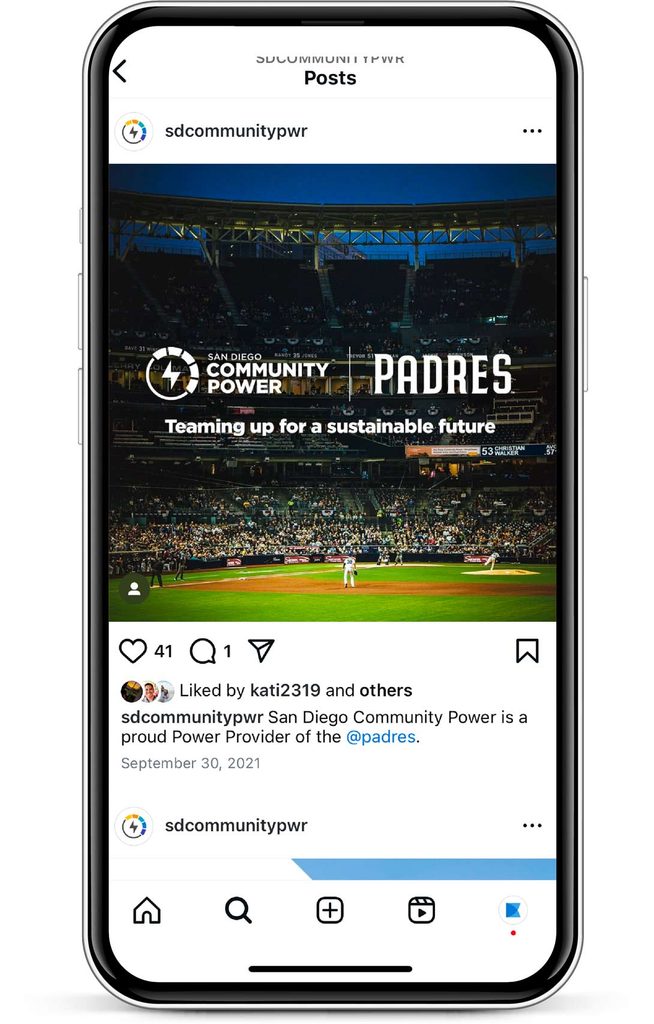
These insights shaped a simple, confident campaign celebrating the five founding cities of SDCP. We also formed partnerships with major local organizations, including the San Diego Airport, San Diego Padres, and San Diego Wave, and landed 242 earned media placements—all helping establish the familiarity, trust, and community credibility we knew customers needed.
Both the commercial and municipal rollouts of SDCP services were highly successful, with opt-out rates of less than 2%—a major achievement.
Make the desired behavior easier.
A rubber band can change everything.
For PaintCare, we managed the video and voiceover production for its “Tips & Tricks” series. These 15-second hacks show how to prevent paint waste and get the most out of your paint the first time. They’re also fun, memorable, and shareable. A win-win.
Our larger behavior change strategy for PaintCare prioritizes simplicity. We know homeowners move through a journey within every paint project: they get inspired, research ideas, buy paint, and eventually ask, “What do I do with my leftover paint?” By aligning PaintCare’s five core messages with key decision points along that journey, we deliver straightforward, actionable guidance for every step: buy right, store right, use it up, give it away, and recycle the rest.
Our audiences can internalize these messages in a snap. The goal is to make them more likely to buy only what they need and get creative about what else they can paint with their leftover paint—and less likely to end up overwhelmed by a garage full of semi-gloss.
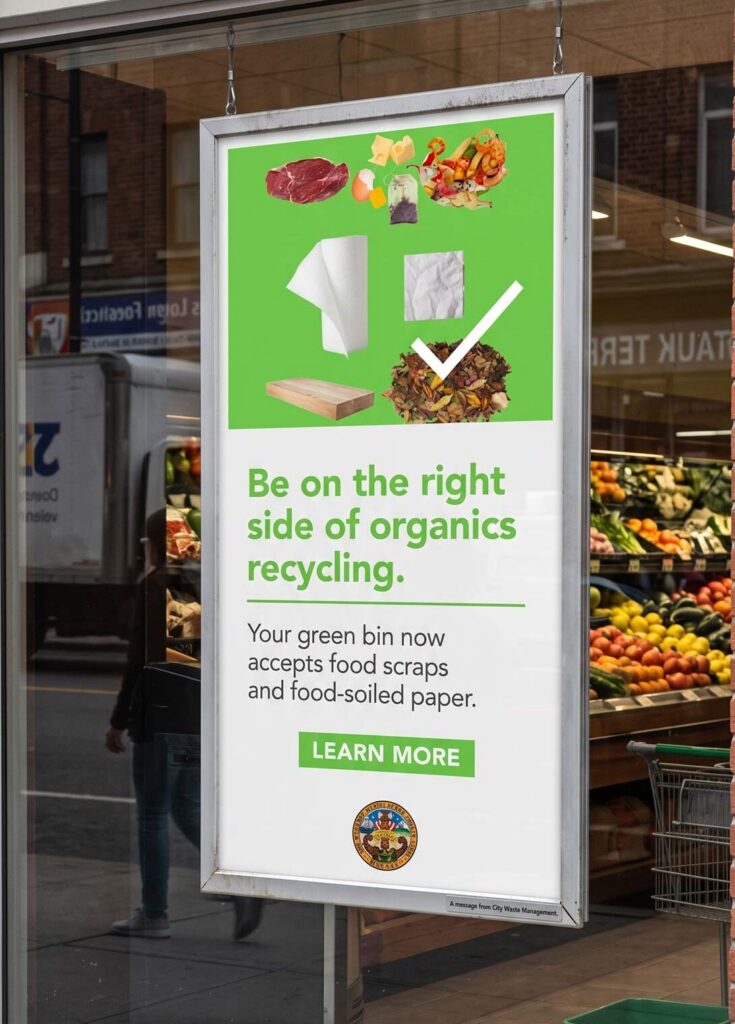
Meanwhile, our creative for County of San Diego’s Recycle Right campaign shows you at a glance what can and can’t be recycled. We moved people from generic “recycling is good” awareness to specific behaviors: empty, dry, and unbagged recyclables.
And for the City of San Diego’s Think Blue environmental campaign, we connected something abstract—stormwater pollution—to specific household and business choices that prevent pollutants from entering waterways.
In each case, the principle is the same: Don’t just tell people an issue matters. Make it clear what they can actually do about it.
Make the behavior feel normal and just “what we do”—not virtuous or burdensome.
Social norms can be a powerful driver of behavior. The more a behavior feels like just “what people do,” the easier it is to adopt.
That’s another goal of our PaintCare messaging. Painting a thrifted table to match the accent wall, offering a leftover half-gallon to a friend—we present these as just things people do. Using up leftover paint doesn’t have to feel like an environmental act or an extra chore. It can simply be part of how we paint.
We used the same principle when the County of San Diego Department of Public Works tapped us to build a campaign around recycling motor oil and oil filters. When people recycle their motor oil, they should also recycle their oil filters. So we made oil and oil filter recycling a timeless duo, as classic as pen and pencil.
We incorporated this messaging in a bilingual (English and Spanish) multimedia campaign that included print ads, direct mail, circular placements, website landing pages, geographically targeted banner ads, Latine/Hispanic and general market radio spots, event planning, and outdoor signage at local community businesses.
We also helped facilitate a corporate partnership program with Kragen Auto Parts to host oil filter exchange events.
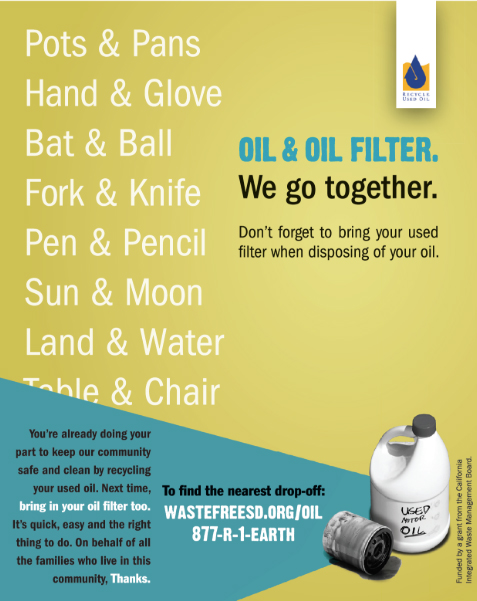
By the end of the campaign, we generated a 20% increase in oil and oil filter recycling rates in the areas we targeted.
Reach people at the right moment.
Timing can play a huge role in a campaign about the environment, sustainability, and/or recycling.
With PaintCare, we’re following how people’s home renovation moods change throughout the year. In other words, there’s definitely a “home improvement season.”
During this peak season—when people are more likely to dive into DIY home improvement projects—we expand the reach of our core messages, targeting spaces where people are actively planning and engaging—like Pinterest. Boosting our overall presence and running a broader mix of active tactics allows us to keep all our core messages top of mind while audience attention and activity are at their highest. In other words, we’re talking to the right people at the right moment, when they’re poring over swatches and chips and rollers.
Creating a new normal
Ideals are important in sustainability campaigns, of course. But they’re not everything. Actions are what move us toward those ideals—so actions, habits, and behaviors are what we need to shift.
What if the sustainable choice became the easy choice? What if it felt less like an extra effort and more like simply “what we do”? What if millions of small shifts in everyday behavior added up to something much bigger?
That’s the opportunity we see in behavior change. If we want a cleaner, healthier world, we need to understand the people living within it now: what drives them, what gets in their way, what the people around them are doing, and even how their attention changes with the seasons. Because closing the gap between wanting a more sustainable world and actually creating one happens one behavior at a time.