
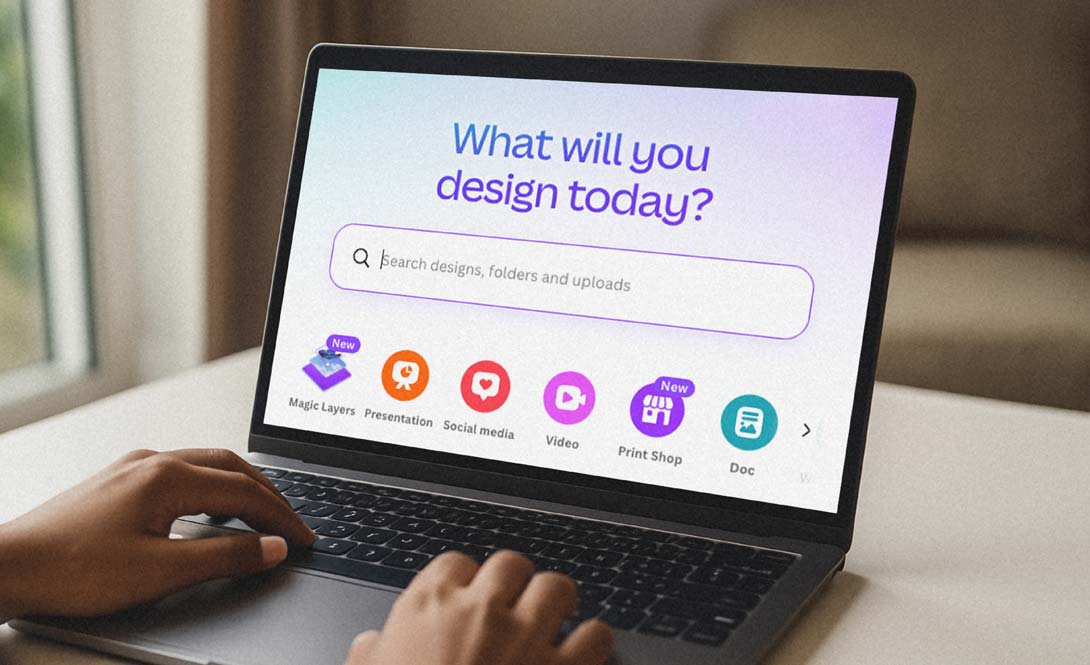
If you designed your logo in Canva, you probably don’t own it
Since its launch in 2013, Canva has democratized a certain kind of design—thanks to its smorgasbord of swirling fonts, vibey ombrés, and airy, grid-friendly templates. Social posts and invites became a snap. Designing a logo became as simple as typing your brand name into a “minimalist retro” template. And boom: there’s your name surrounding a mountain range, or cradled by an olive branch, or floating in a tasteful semicircle.
If you’re a small business or non-profit, that’s attractive.
You need an identity that reflects your vision and the good you do in the world. You need it quickly. And logo design is notoriously difficult. A great logo should be memorable, distinctive, and easy to understand.
But here’s the problem.
If you designed your logo using a Canva template, then you don’t actually own your logo.
At least, not in the way most people think.
And that’s important because your logo isn’t just a design. It’s an asset.
Canva templates use stock design elements that can be customized and reused by other users. You generally have permission to use the resulting design, but your rights to it may not be exclusive.
That can create complications if you want to trademark your logo, protect your brand from imitators, or claim exclusive ownership of the design.
Canva is upfront about these limitations in its licensing terms. The issue isn’t that Canva is hiding anything. It’s that many users don’t realize the implications until they’re trying to trademark a logo, protect their brand, or scale their organization.
If you can’t trademark your logo, you can’t prevent a competitor from using something confusingly similar. And if you want to print your logo on a product, t-shirt, sticker, or sign, you won’t be able to declare to the printers, “yes, I own the copyright to this design.”
See how that clean, fast Canva logo suddenly becomes a messier situation?
Yes, you Can…va. But should you?
The ownership question is important. But in our view, it’s not the most interesting part of the story.
The bigger issue is what happens when convenience becomes a substitute for thoughtful brand strategy.
The same technology that promises endless personalization can sometimes produce the opposite result: a sea of organizations that look remarkably alike.
Designers across the industry have pointed out these pitfalls, and we’ve all seen the results. Organizations in different places with completely different missions and audiences end up sharing the same visual DNA.
That’s the irony of technology that promises personalization through algorithms—it can ultimately result in a flattened, homogeneous world, where a coffee shop in Cape Town becomes indistinguishable from coworking space in Minneapolis. (To go down that rabbit hole, check out Filterworld by Kyle Chayka.)
This phenomenon has become so common that designers often refer to it as the “Canva look.”
That’s not really Canva’s fault; templates are designed to be broadly appealing. The challenge is that broad appeal isn’t the same thing as distinction.
And distinction is exactly what a brand identity is supposed to create.
Even more importantly, it’s supposed to feel authentically and unmistakably like you.
A logo is the result of strategy, not the substitute for it.
One of the biggest misconceptions about branding is that the logo is the brand.
It isn’t. The logo is the visual expression of a much bigger set of decisions.
Before a strong logo is ever designed, branding experts are asking questions like:
- What makes this organization different?
- Who are we trying to reach?
- What perceptions are we trying to create?
- What visual territory is already crowded?
- What do competitors look and sound like?
- What story are we trying to tell?
- What should people remember about us?
- How do we want people to feel?
The logo emerges from those answers.
That’s why the best logos often look deceptively simple. The hard work isn’t drawing the mark. The hard work is understanding what that mark needs to communicate.
A template can give you a logo.
It can’t tell you who you are. It can’t tell you what makes you different.
And it can’t tell you how you want people to feel when they encounter your organization.
Canva isn’t the problem.
To be clear: we like Canva. We use it.
The goal isn’t to avoid Canva—it’s to understand what it’s best at. For visually appealing presentations, event announcements, Instagram carousels that need to tell a story quickly, and a hundred other practical needs, it can be an incredible time-saver.
But brand identity serves a different purpose.
Its job isn’t just to look good. Its job is to be remembered. To be recognized. To be trusted. To be distinctly yours.
(Canva can also be useful for collateral like postcards and booklets. But be warned: if you need hard copies—ownership issues aside—designs created on Canva can present an avalanche of problems at the printer.)
So what should you do instead?
You can create a logo from scratch using Canva’s free library of basic lines, shapes, and fonts.
You can hire a freelancer.
You can work with an agency.
The tool matters less than the thinking behind it.
A good branding process doesn’t just generate a logo. It uncovers what makes your organization distinctive and translates it into something visual.
It helps you see yourself more clearly, too.
And when it’s done well, you end up with something you probably wouldn’t have found on your own: a logo that captures your organization’s story, stands out in a crowded landscape, and feels meaningful, maybe a little surprising, and completely unique to you.
Some things are just too important to plug into a template.